


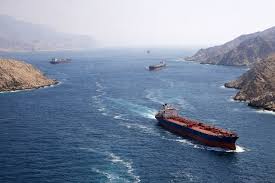

The U.S. blockade of Iranian shipping is unfolding successfully so far, according to U.S. Central Command, with enforcement actively underway along the Gulf of Oman coastline. Two tankers attempting to leave Chabahar were intercepted by a U.S. Navy destroyer and instructed to turn around, officials told Reuters late Tuesday. Separately, officials told the New York Times that six Iran-linked vessels reversed course after U.S. forces contacted them by radio and directed them to return to an Iranian port.
Inbound traffic may prove harder to police, as tankers transiting the strait on a westbound voyage could theoretically call on any Gulf country. In practice, most of Iran’s exports rely on a separate fleet of “shadow” tankers, many of which are sanctioned by the U.S. government; for these blacklisted ships, Iranian barrels are the only cargo available in the Gulf.
However, one sanctioned vessel slipped through the U.S. Navy blockade, transited the Strait of Hormuz, and arrived in Iran, TankerTrackers.com reported late Tuesday—notably, with its AIS tracking turned on throughout the voyage. Shortly after, U.S. Central Command claimed in a statement that “U.S. forces have completely halted economic trade going into and out of Iran by sea.”
The blockade explicitly exempts traffic to and from all other Gulf ports, and more risk-tolerant shipping interests appear to be accepting the new arrangement. Over 20 neutral vessels have transited the Strait of Hormuz since Monday, two U.S. officials confirmed to the Wall Street Journal. AIS data shows little movement, however, and the officials confirmed that some ships were making the crossing without broadcasting their positions.
Effects on Iranian Oil
The blockade’s primary objective is to clamp down on seaborne exports of Iran’s oil—a stark reversal of last month’s policy. In March, the administration issued a blanket waiver that temporarily lifted sanctions on Iran’s seaborne oil to speed its delivery to market and stave off rising global oil prices.
Now, the U.S. Treasury is reverting to a “maximum pressure” campaign on Iran’s oil exports and the entities that enable them. In a statement, the Treasury announced it is “moving aggressively with Economic Fury” and stands ready to impose secondary sanctions on foreign banks that support Iran’s energy industry.